Acknowledgement of Country
We acknowledge the Traditional Owners and Custodians of the lands on which we live and work. We pay our respects to Elders past, present and emerging, and extend that respect to all Aboriginal and Torres Strait Islander peoples.
President's Welcome
Welcome to the inaugural edition of the Australian Society for Mechanobiology (AuSMB) Newsletter. We are excited to launch this newsletter as a new way of keeping our community connected, informed and engaged throughout the year.
It has been a busy start to the year for the Executive Committee as we continue to build on the momentum of our growing Society. Reflecting on 2025, it was another successful year for AuSMB, with strong member engagement and excellent scientific activities.
I would like to sincerely thank our Immediate Past President, A/Prof Maté Biro, for his outstanding leadership and service to AuSMB. We are delighted that he will continue to support the Society as Immediate Past President.
While we celebrate these achievements, we also recognise that ongoing conflicts and humanitarian crises continue to affect members of our community and the broader scientific community. Our thoughts are with everyone facing these difficult circumstances.
Looking ahead, 2026 promises to be an exciting year. We are delighted to launch our inaugural AuSMB Research and Strategy Workshop, which will provide opportunities for members to present their work, build collaborations, and help shape the future of mechanobiology in Australia. The International Society for Mechanobiology Meeting is just around the corner, and we are pleased to support several members with travel awards to represent Australian mechanobiology on the international stage. Planning is also underway for our next AuSMB Annual Meeting, which is anticipated to be held in New Zealand.
Your continued membership and support enable us to provide travel grants, networking opportunities, and initiatives that strengthen our community. Thank you for your continued support, and I look forward to seeing many of you throughout the year.
— Sara Baratchi, President
The Executive Committee in 2026
We are pleased to introduce the AuSMB Executive Committee for 2026. While many of our Council members continue in their existing roles, including Treasurer Dr Charles Cox, we welcome A/Prof Sara Baratchi as President, A/Prof Anne Lagendijk as Vice President, and Dr Sarah Boyle as Secretary. We also welcome Dr Marco Enriquez Martinez as our Early Career Researcher Representative and Murron Carroll as our Student Representative. We extend our sincere thanks to Dr Remy Brynn for valuable contributions to the Executive Committee and wish Remy all the best.
Thank You to Our Immediate Past President
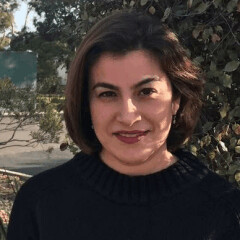
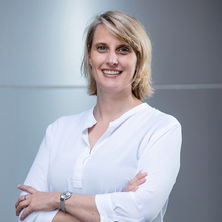
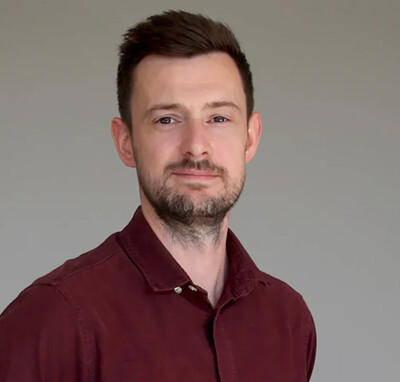
AuSMB sincerely thanks A/Prof Maté Biro for his outstanding leadership and dedicated service as President over the past two years. During his tenure, the Society continued to grow through improvements to our website, the successful delivery of our national meeting, and the introduction of travel support for members attending the International Society for Mechanobiology meeting. These initiatives strengthened our community and created valuable opportunities for our members. We are delighted that Maté will continue to support AuSMB as Immediate Past President.

A/Prof Maté Biro
Immediate Past President
Recognition, Positions and Awards
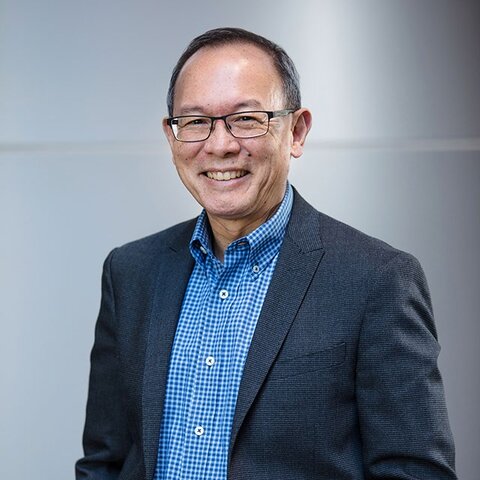
Professor Alpha Yap of UQ's Institute for Molecular Bioscience was recently elected to the 2026 Fellowship of the Australian Academy of Science. This is well-deserved recognition of his contribution to Australian science and leadership in our field. Congratulations!
The Society congratulates Phoebe Adler (University of Otago) and Metka Gorkič Casey (UQ IMB) on their successful applications to receive AuSMB Registration Support to the upcoming International Society of Mechanobiology Meeting at SynSci2026, in Glasgow. We look forward to hearing about their experience at the conference!
Congratulations to those in our community who received Australian Research Council funding at the end of 2025, for funding that commenced this year, including:
- A/Prof Sam Stehbens (UQ), Discovery Project — “Understanding how cells withstand compression in crowded environments.”
- Prof Alpha Yap (UQ), Discovery Project — “How Adherens junctions coordinate cell signaling for epithelial homeostasis.”
- Dr Zijing Zhou (UNSW/VCCRI), Discovery Early Career Research Award — “A new family of mechanically-activated lipid scramblases.”
Meeting Report — MechBio2025, Brisbane

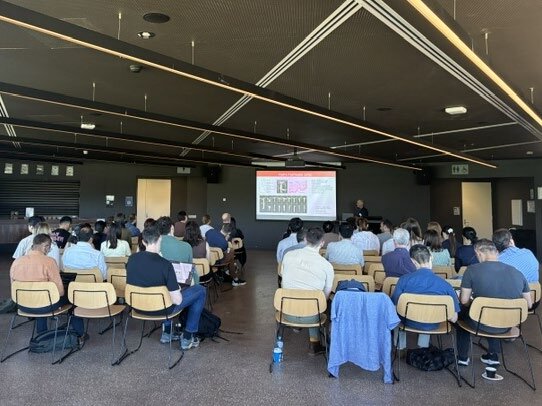
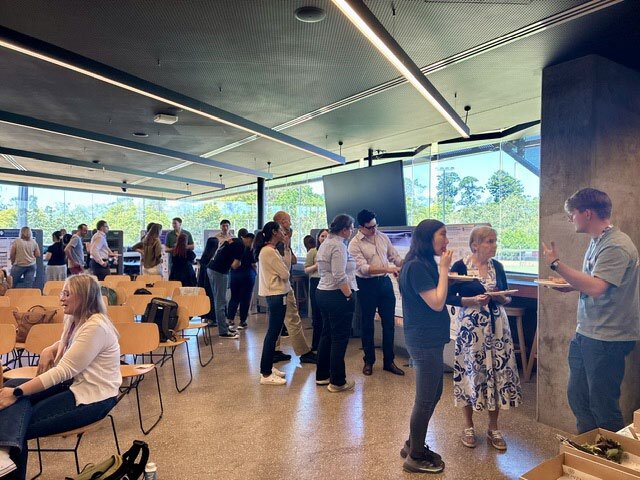
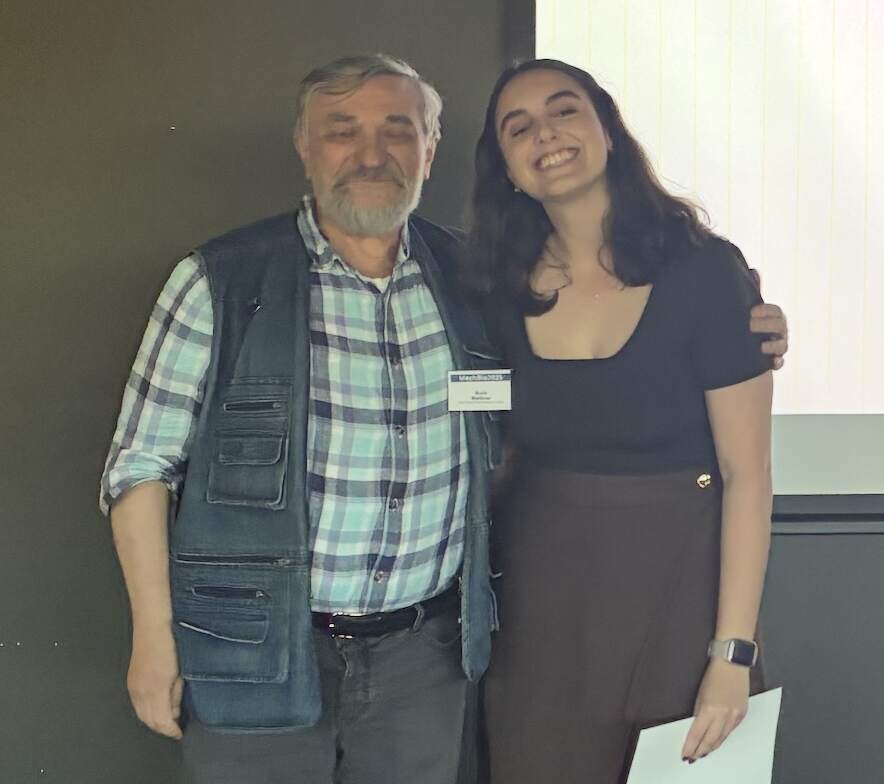
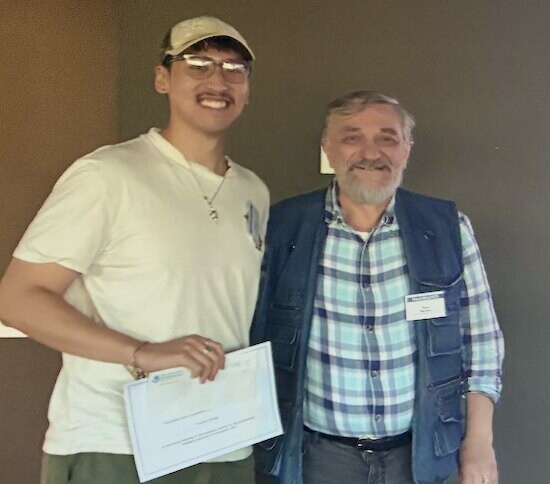
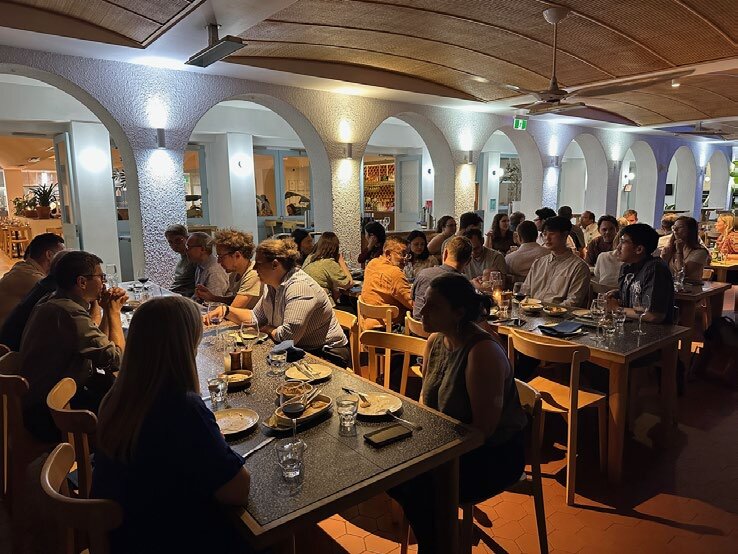
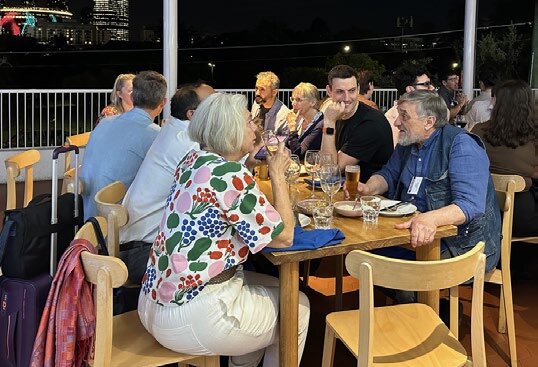
MechBio2025 was held 5–6 November in sunny Brisbane. It brought together 57 researchers with a shared interest in understanding how physical forces and cell mechanics control cell and tissue behaviour. The meeting showcased unpublished work from established experts, ECRs and PhD students. We also hosted two distinguished international keynote speakers: Prof. Julia Yeomans from the University of Oxford and Prof. Edouard Hannezo from the Institute for Science and Technology in Austria. The 22 presentations and poster sessions evoked lively discussion and undoubtedly led to new ideas and collaborative avenues. Discussions became ever more lively during the outdoor conference dinner at the Greek Club, where attendees enjoyed delicious food with a striking view of the Brisbane skyline. Prizes were awarded to Christanny Schmidt (best presentation) and Frankie Zhang (best poster).
— Anne Lagendijk and Melanie White
Sponsors:




Publication Highlights from Members
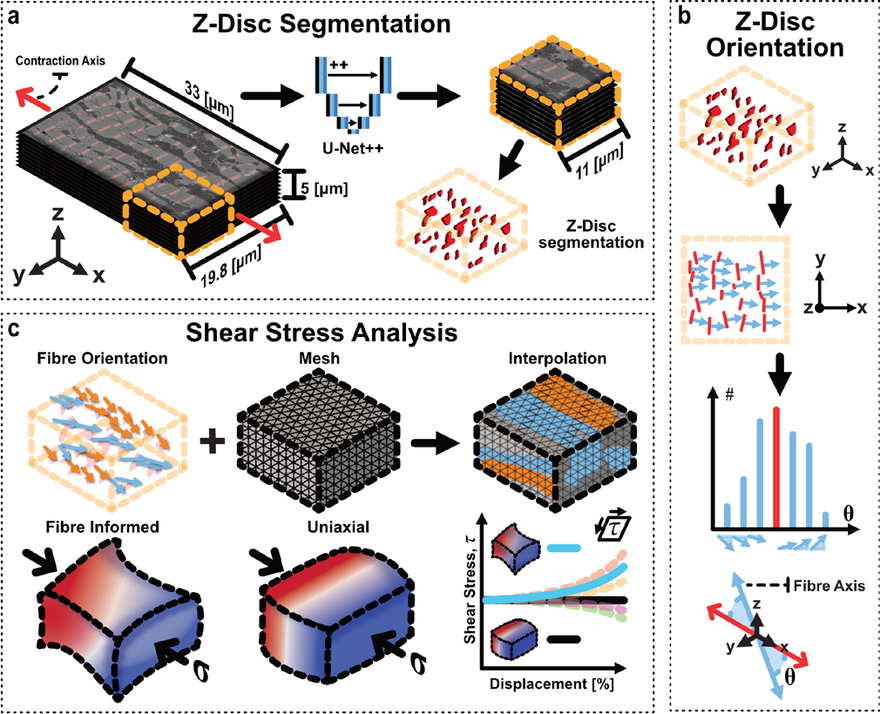
Cardiac myofibril networks induce shear stress
npj Systems Biology and Applications 12:75 (April 2026). Lead author: Liam Murray; Senior author: Vijay Rajagopal. Read the paper.
This work explores the impacts of myofibril orientation on the stress dynamics of contracting sheep cardiomyocytes. Segmentation of electron microscopy images, alongside physics-based simulations, demonstrates that myofibrils create a distribution of angles within the cell, so that contraction induces shear stresses not accounted for in existing uniaxial models.
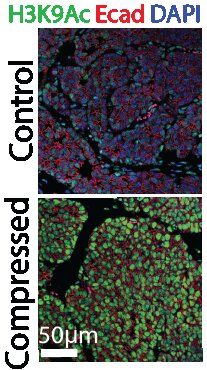
Compressive stress–driven Piezo1 activation and Rho-ROCK mechanotransduction promote tumor progression via epigenetic mechanical memory
Science Advances 12:10 (March 2026). Lead/co-corresponding author: Sarah Boyle; Senior/co-corresponding author: Michael Samuel. Read the paper.
Breast cancer cells subjected to compression activate the mechanosensitive ion channel PIEZO1, driving Rho-ROCK mechanotransduction and acetylation of nuclear histone proteins. These epigenetic alterations establish a mechanical memory that keeps cells highly invasive and proliferative even after the stimulus is removed, suggesting PIEZO1 as a potential mechanotherapy target.
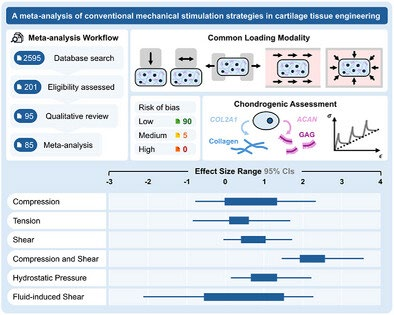
Standardized Effect Measures Informing Next-Generation Strategies for Mechanical Stimulation in Cartilage Tissue Engineering
Advanced Healthcare Materials e71309 (May 2026). Lead author: Jiaqi Shen; Senior author: Kathryn Stok. Read the paper.
A systematic review and meta-analysis of 85 in vitro studies, applying standardised effect measures, reveals that combined compression and shear loading optimally promotes cartilage matrix development — establishing a quantitative baseline for mechanically stimulated chondrogenesis.
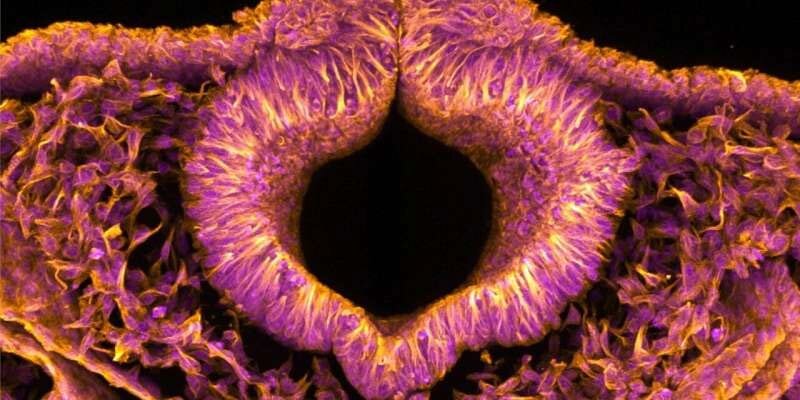
Quantitative live imaging reveals PRICKLE1 controls junctional neural tube morphogenesis independent of Planar Cell Polarity
Nature Communications 17:3654 (April 2026). Lead author: Jianxiong Wang; Senior author: Melanie White. Read the paper.
High-resolution quantitative live imaging in transgenic quail embryos uncovers a planar-cell-polarity-independent role for Prickle1 in junctional neural tube formation, offering new insight into how junctional neural tube defects may arise.
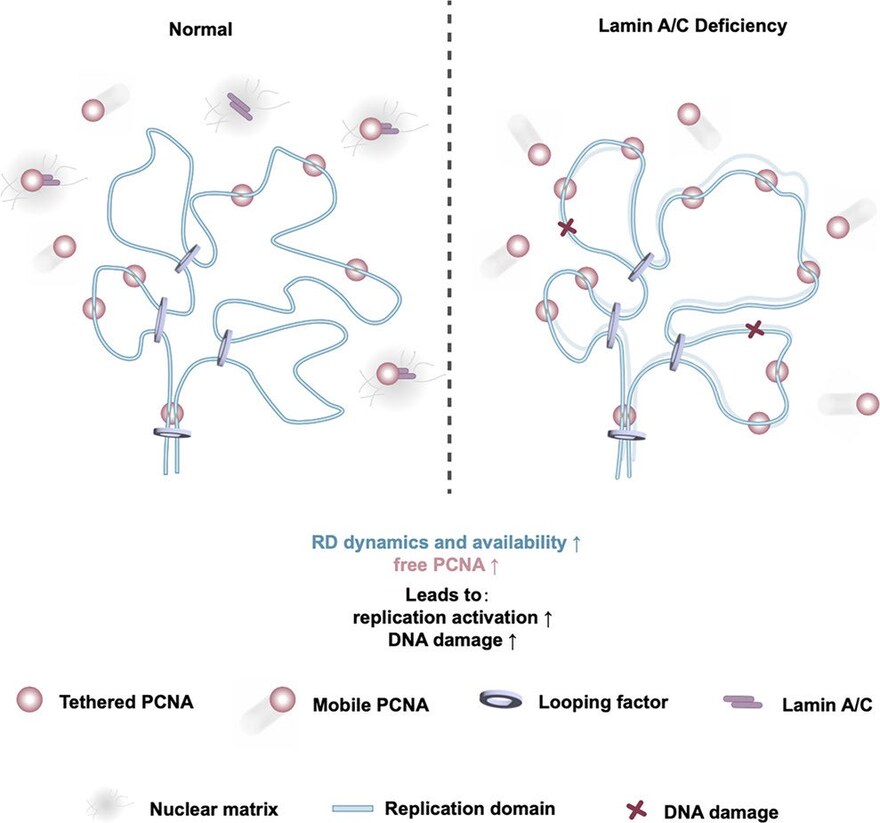
Lamin A/C safeguards replication initiation by orchestrating chromatin accessibility and PCNA recruitment
Cell Reports 45:3 (March 2026). Lead author: Mengling Zhang; Co-Senior authors: Qian Peter Su and Yujie Sun. Read the paper.
Super-resolution imaging shows that lamin A/C deficiency increases chromatin dynamics, replication domain accessibility and PCNA availability, together driving increased initiation density and replication-dependent DNA damage — highlighting lamin A/C as a critical gatekeeper of balanced replication initiation.
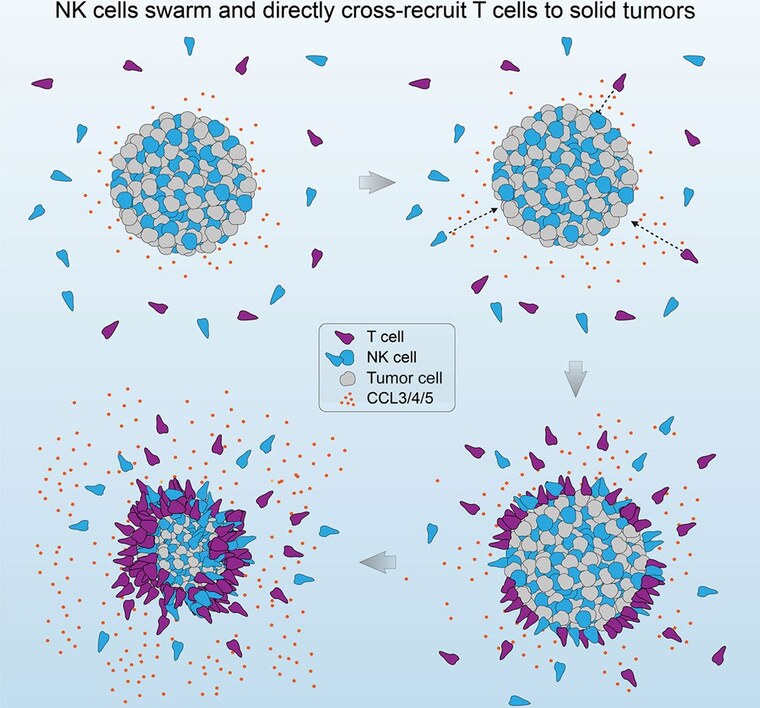
Natural killer cells swarm and cross-recruit cytotoxic T cells via CCR5
Cell Reports 45:36 (June 2026). Lead author: James Cremasco; Senior author: Maté Biro. Read the paper.
Using solid tumour models and quantitative imaging, the authors show that murine and human NK cells swarm to tumour targets via diffusive chemokines binding the CCR5 receptor, and that activated NK cells and CTLs can directly cross-recruit one another — demonstrating homotypic swarming and heterotypic cross-recruitment to targets.
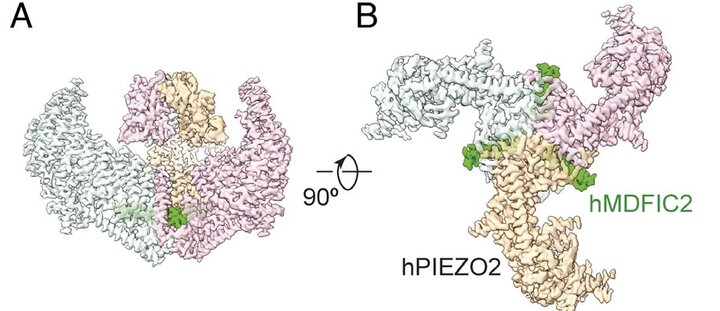
MDFIC2 is a sensory neuron–specific PIEZO channel auxiliary subunit
PNAS 123:15 (April 2026). Co-Lead authors: Zijing Zhou and Fei Dai; Co-Senior/corresponding authors: Yixiao Zhang and Charles Cox. Read the paper.
This report identifies MDFIC2, an uncharacterised MyoD family member, as a PIEZO channel auxiliary subunit selectively expressed in subsets of mechanosensitive sensory neurons. The structures also reveal a potentially druggable interface on human PIEZO2 for rational design of PIEZO-targeted therapeutics.
Student & ECR News — Epithelial Mechanics Fan Club
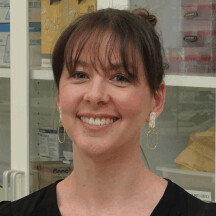
For nearly three years, Julia Eckert (Postdoc, IMB at UQ) and Nimesh Chahare (Postdoc, Columbia University) have been leading the Epithelial Mechanics Fan Club, a vibrant online platform with thousands of followers worldwide. Recently featured on FocalPlane, the initiative offers early-career researchers an opportunity to showcase their research interests through mini-review threads — from cutting-edge tools for probing cell mechanics to mechanobiological mechanisms, developmental biology, and theoretical models of both in vitro and in vivo systems.
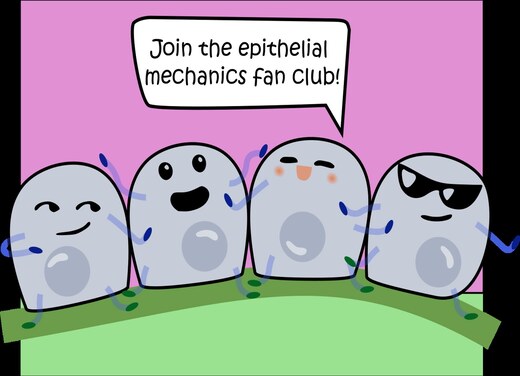
The community's growing reach has already sparked collaborations and opened doors for young scientists seeking their next opportunities.

Nimesh Chahare
Columbia University
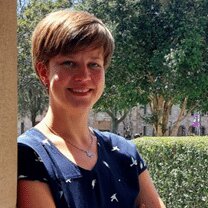
Julia Eckert
IMB, University of Queensland
Passionate about #EpithelialMechanics? The Fan Club would love to hear from you:
- Julia Eckert: j.eckert@imb.uq.edu.au
- Bluesky: @epimechfc.bsky.social
- Website: epithelialmechanics.github.io
Upcoming Events
The Australian Society for Mechanobiology is pleased to launch its inaugural Research & Strategy Workshop — a new community-focused initiative designed to strengthen connections across the Australian mechanobiology community. The workshop aims to bring researchers together in a collaborative and interactive environment to identify emerging opportunities and help shape the future direction of the field.
- When: 11–12 November 2026
- Where: The Studio, Melbourne Connect, 700 Swanston St, Carlton VIC 3053
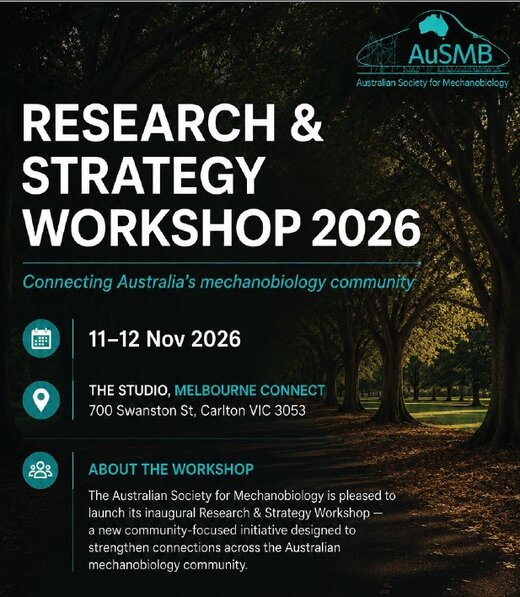
Further details regarding abstract submissions, registration, speakers, and the evolving workshop program will be announced soon.
Calls for Papers
The following journals have active special calls for papers in the mechanobiology field:
Mechanobiology in Medicine (ScienceDirect)
- Cellular Mechanobiology and Immune Engineering — deadline 31 Dec 2026
- Mechano-Regulation on Cell Memory — deadline 31 Dec 2026
npj Biological Physics and Mechanics (Nature group)
- Mechanobiology of the Extracellular Matrix — deadline 31 Aug 2026
- Nuclear Mechanobiology — deadline 12 Sept 2026
- Mechano-Signaling Systems in Multicellular Tissues — deadline 30 Sept 2026
- Decoding Mechanosensitive Cell Types: From Molecular Transducers to Therapeutic Innovations — deadline 6 Nov 2026
- Mechanosensitive and Mechanoregulatory Ion Channels — deadline 24 Dec 2026
Mechanobiology (Sage Journals)
- Mechanical Force Quantification in the Immune System — deadline 31 Aug 2026
Cancer and Metastasis Reviews (Springer Nature)
- Mechanobiology — submissions ongoing
Get Involved!
Do you have news, recent publications, or received an award? Know of upcoming conferences, grant/fellowship funding or other opportunities of interest to the field? Have a job opening? We want to hear from you! Send any future newsletter items to secretary Sarah Boyle (sarah.boyle@adelaide.edu.au) or get in touch via your State Representative.
Interested in joining the AuSMB Council? We are currently seeking a Diversity and Inclusion (D&I) Representative to help shape inclusive policies, initiatives, and resolutions for our Society. If you are interested in this role, please get in touch.
For all the society news, follow AuSMB via our website and on X (@AuSMBSoc).