About the Meeting
The International Society of Mechanobiology Meeting was held as part of SynSci2026 in Glasgow, UK, 12–16 July 2026. This page collects everything from that meeting: the members AuSMB supported to attend, their reports, and member awards.
Our 2026 Recipients
The AuSMB Council awarded the 2026 Glasgow Registration Support to:
- Phoebe Adler, University of Otago
- Metka Gorkič Casey, Institute for Molecular Bioscience, UQ
Both recipients have now attended the meeting. Their conference reports are below.
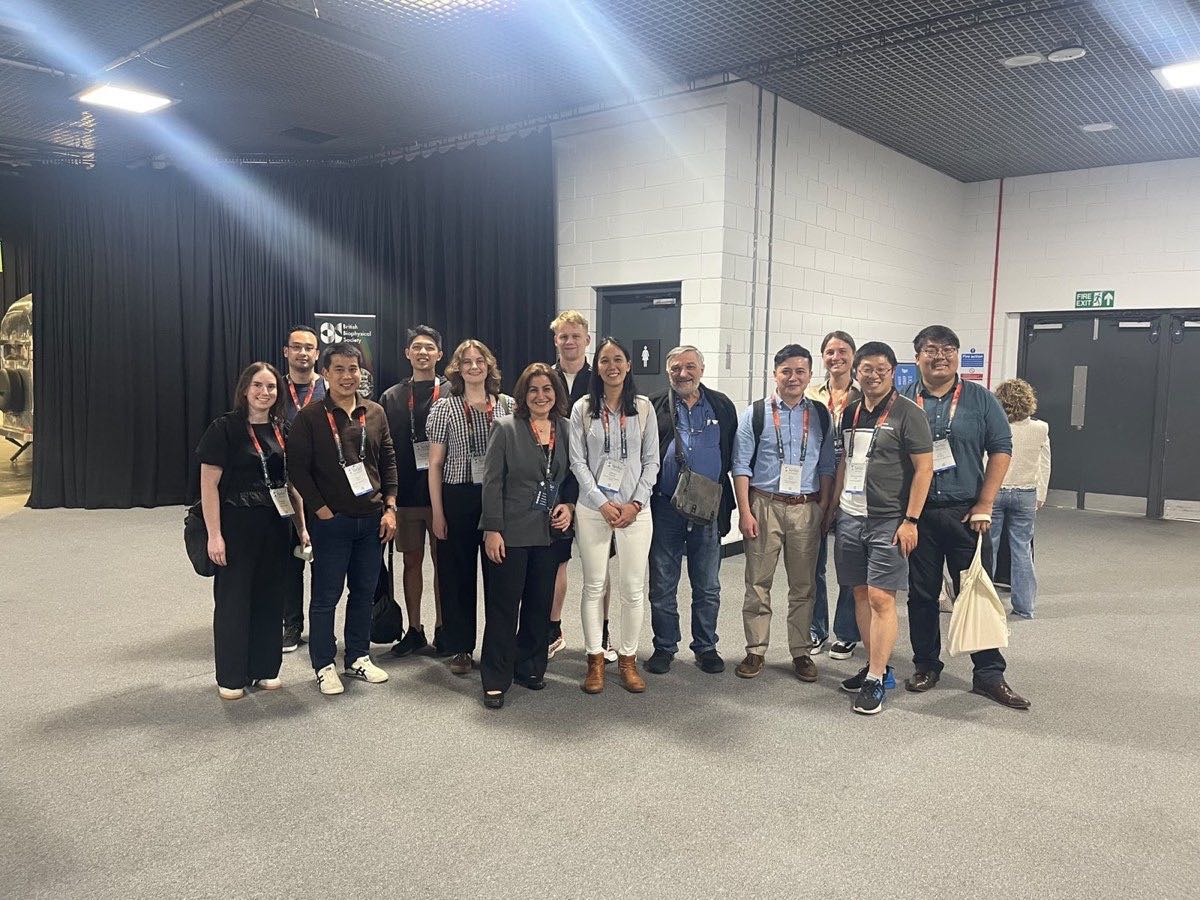
Member Success at SynSci2026
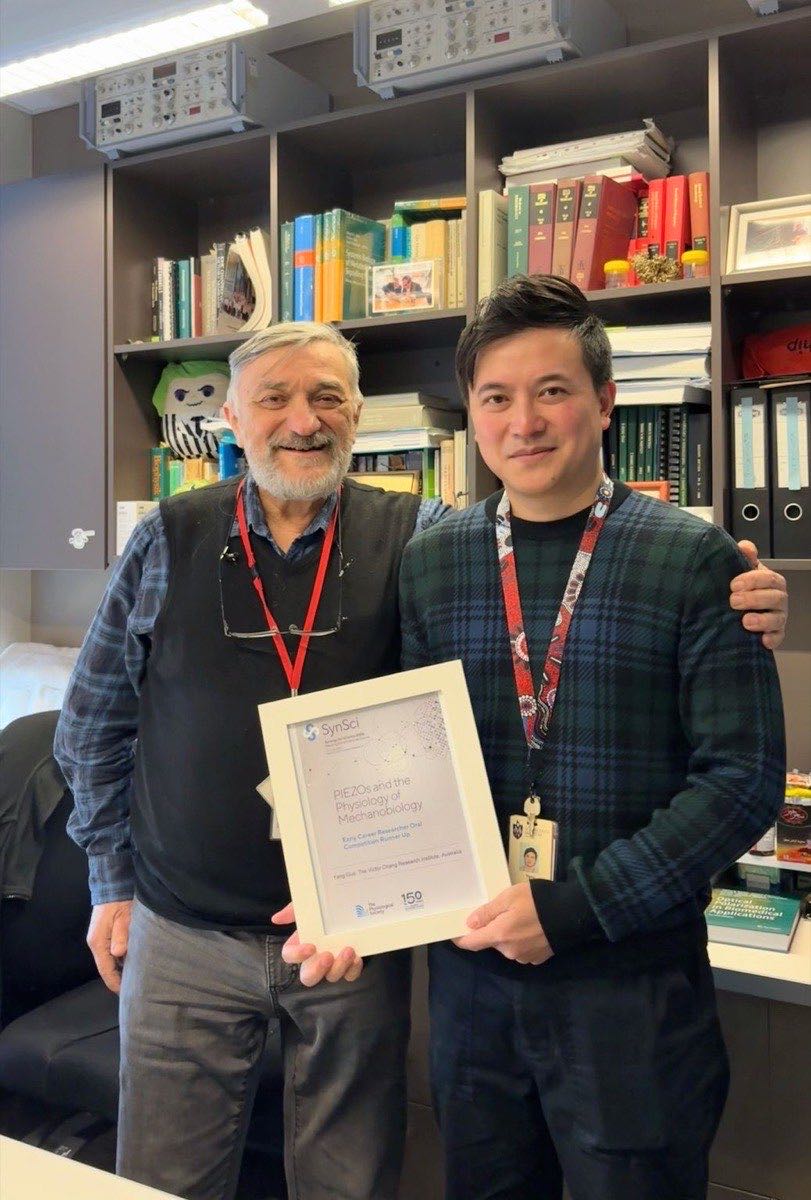
Yang Guo, a senior postdoctoral researcher in the Mechanosensory Biophysics Laboratory of Prof. Boris Martinac at the Victor Chang Cardiac Research Institute, was named Early Career Researcher Oral Competition Runner Up in the PIEZOs and the Physiology of Mechanobiology session at SynSci2026, awarded by The Physiological Society.
The Society congratulates Yang on this recognition, which highlights the part early career researchers play in our understanding of the biological mechanisms behind cardiovascular health and disease.
Conference Reports
As a condition of the award, recipients submit a short report on the meeting.
Phoebe Adler, University of Otago
I was grateful to receive registration support from the Australian Society for Mechanobiology to attend the International Symposium for Mechanobiology as part of SynSci2026, where I presented my PhD research in a talk titled ‘Characterisation of TRPV channel mechanosensitivity: implications for vasopressin neuron osmosensing’. Presenting my research to an international audience allowed me to discuss my research in a focused scientific setting and to gain expert, field-specific feedback from leading international researchers working at the forefront of mechanobiology, providing novel perspectives on my research.
The symposium also provided an invaluable opportunity to hear from world-leading international researchers and learn about current developments in mechanobiology. The presentations allowed me to engage with cutting-edge advancements in mechanobiology and provided insight into emerging concepts and techniques. A major highlight was the Plenary talk by Professor Ardem Patapoutian and an Invited talk by Professor Boris Martinac, which provided significant insights into the study of mechanosensitive ion channels, which closely aligns with my research. This supported the development of my scientific knowledge and independent research expertise.
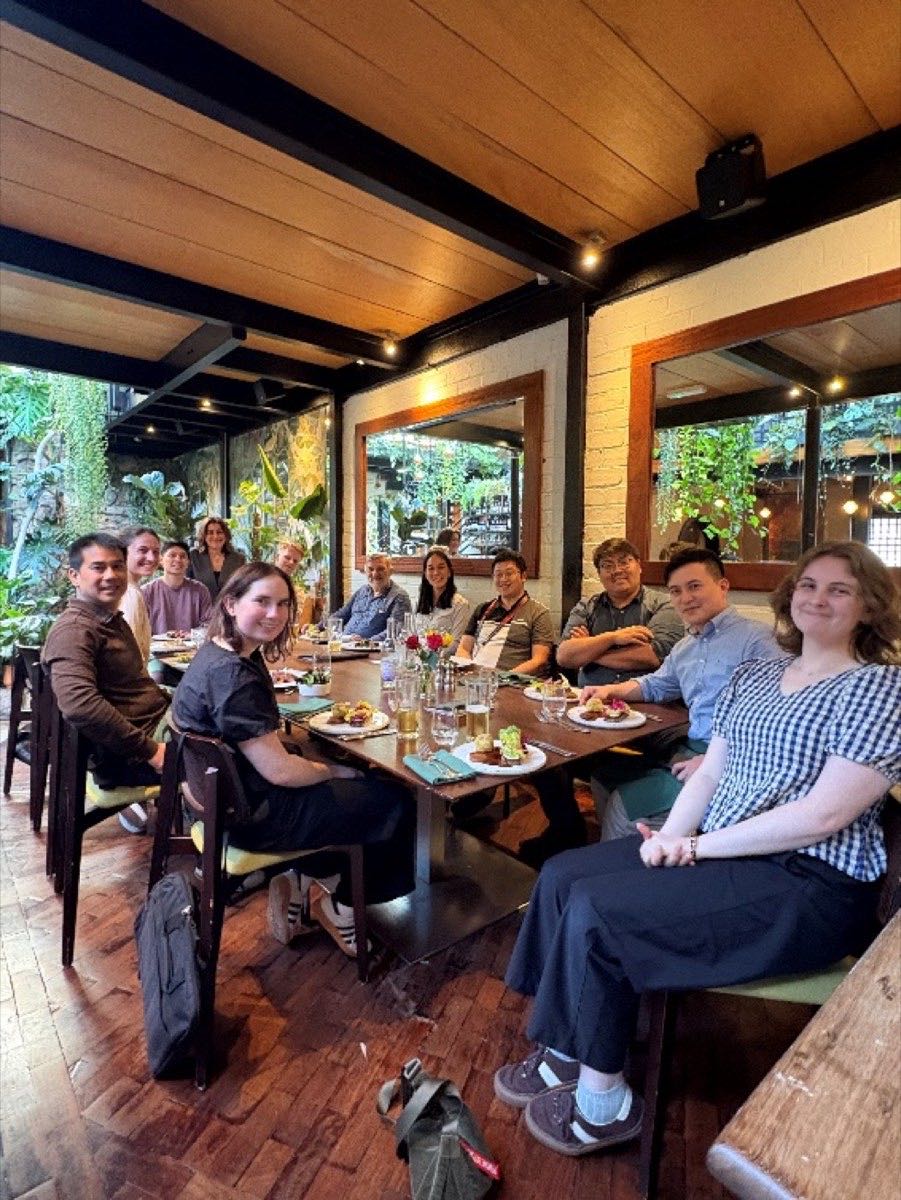
As a final-year PhD candidate, the symposium also provided an important opportunity to establish connections with researchers from across the international mechanobiology community. I was able to engage in discussions with researchers whose work closely relates to my own research interests, as well as with researchers working across the broader field of mechanobiology. These interactions allowed me to exchange ideas, learn from researchers with different areas of expertise, and expand my professional network. I also had the opportunity to attend a dinner organised by the Australian Society for Mechanobiology, which provided an informal setting to connect with other researchers and students. As I approach the completion of my PhD, these connections will greatly support my progression to the next stage of my research career.
Overall, attending the International Symposium for Mechanobiology allowed me to receive valuable feedback and novel perspectives on my research, strengthen my knowledge and expertise in ion channel mechanobiology, and expand my professional network. The registration support from the Australian Society for Mechanobiology enabled me to attend this symposium and has made a significant contribution to my research and career development.
Metka Gorkič Casey, Institute for Molecular Bioscience, UQ
In July I attended ISMB 2026 in Glasgow.
This was a fantastic opportunity for me to present our recent research into epithelia-intrinsic inflammation in the gut that we are currently investigating. We found that cells cultured in vitro in sterile environments can express pro-inflammatory cytokines such as TNF in response to apoptotic extrusion. This was a topic well integrated into the Immunomechanobiology topic arm of the ISMB that mainly ran on Tuesday the 14th of July.
Excitingly, we heard Ardem Patapoutian speak about his current projects, which was a phenomenal way to start the conference. This incredibly inspirational talk genuinely highlighted the (very optimistic) potential of our research for future clinical uses.
I presented a flash talk during an immunobiology session. My flash talk was only 5 minutes, but did allow for people to approach me during my e-poster presentation which occurred an hour later. This resulted in fruitful considerations discussed and opened some possibilities for potential collaborations in Bristol, UK.
Further, during the immunomechanobiology session we heard from Marlen Gonzalez, who presented the role of Piezo1 in lung immunity. This was very intriguing, as Dr. Zoya Mann in our lab recently published a study exploring the role of Piezo1 in mechanosensing of apoptotic extrusion.
Further, research from Andreas Ludwig’s lab suggests that this could be linked back to TNF expression through ERK, which neatly ties another of our lab’s projects that I am involved in. It was particularly interesting to have an opportunity to discuss these topics with the presenters and ponder potential future pathways.
Lastly, this has given me an opportunity to reconnect with my existing scientific community, including European researchers, and Australian members of the society.
I would like to thank AuSMB for this award, and consequently allowing me the opportunity to attend. I believe this has been a fundamental experience for me, and I feel honoured to have been able to represent MechBioAus.
Sincerely,
Metka Gorkič Casey
Registration Support Details
Applications for the 2026 round are now closed.
- Support: Up to 2 registration fee waivers (~$1,000 AUD each, ~$2,000 total)
- Eligibility: Current AuSMB members (student or ECR) who had an oral or poster abstract accepted at the meeting
- Reimbursement: Reimbursed upon submission of proof of registration payment and confirmation of attendance
Timeline
- Conference dates: 12–16 July 2026
- Application deadline: 4 May 2026 (closed)
- Outcome notified: May 2026
Assessment Criteria
Applications are evaluated by the AuSMB Council using the following rubric (each criterion scored 1–5).
| Category | Criterion | 1 (Low) | 3 (Moderate) | 5 (High) |
|---|---|---|---|---|
| Abstract | ||||
| Clarity and Tone | Lacks clarity and scientific tone | Moderately clear with a somewhat scientific tone | Highly clear with precise scientific tone | |
| Originality | Lacks originality and innovation | Shows some originality and creativity | Significantly original and innovative | |
| Presentation of Results | Results poorly presented, lack clarity | Presents results with moderate clarity | Highly detailed and precise presentation | |
| Writing Quality | Numerous mistakes, lacks clarity | Moderately well-written with minor mistakes | Excellently written, no mistakes, highly clear | |
| Motivation Letter | ||||
| Clarity of Purpose | Purpose lacks clarity, poorly expressed | Provides a moderately clear purpose | Highly clear and precisely expressed purpose | |
| Relevance of Goals | Goals irrelevant, not related to award | Demonstrates moderate relevance of goals | Highly relevant goals closely aligned with award | |
| Demonstration of Need | Fails to demonstrate need for support | Moderately demonstrates need; some justification | Highly compelling demonstration of need and thorough justification | |
| Curriculum Vitae | ||||
| Academic Achievements (relative to opportunity) | Lacks significant achievements or experience | Moderate achievements, could be more detailed | Highly detailed, relevant, and well-documented | |
| Presentation and Format | Poorly formatted, lacks professionalism | Moderately formatted with minor issues | Excellently formatted, professional appearance | |
Total score: out of 45 (9 criteria × 5 points each)